Yoga vs Pilates for Beginners: Which Should You Try First?
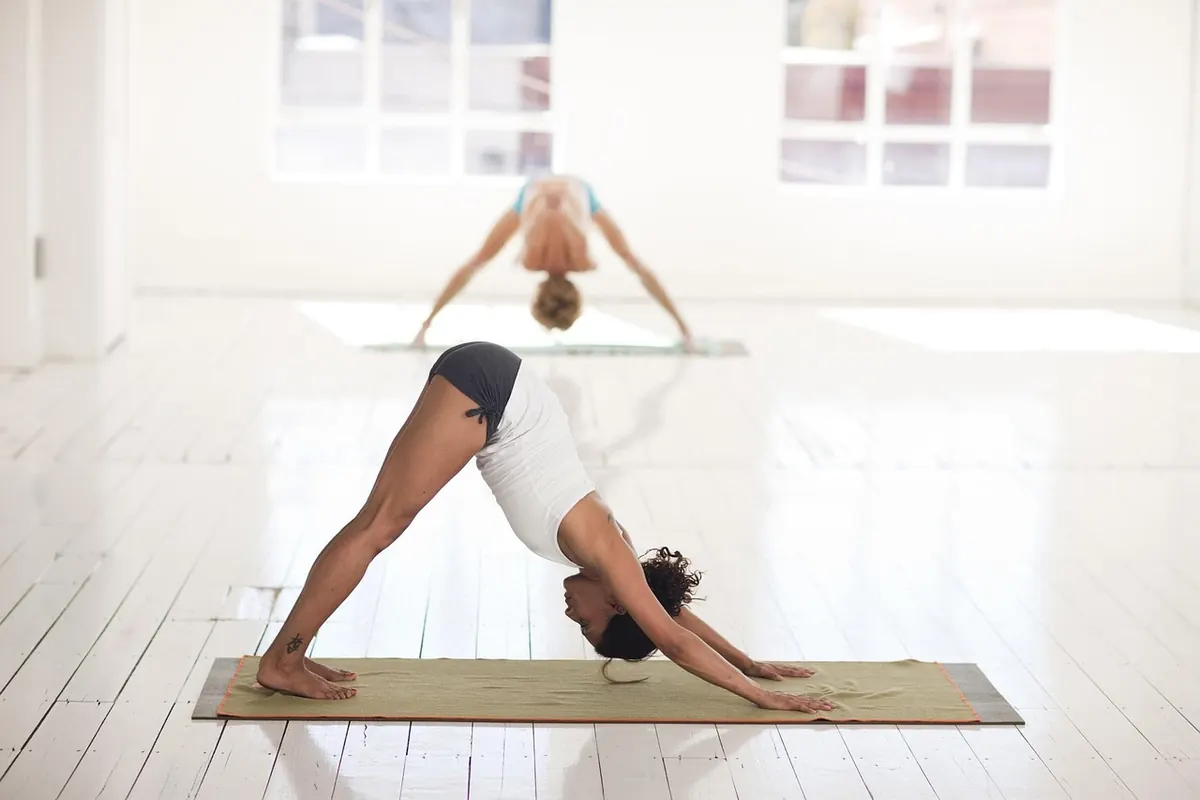
Standing in a leisure centre corridor with a timetable in your hand, yoga and Pilates can look interchangeable. Both happen on a mat, both are quiet, both promise you will feel better on the way out than you did on the way in. Ten minutes into a class, they feel nothing alike. One has you holding a shape and breathing through it; the other has you shifting your ribs a couple of centimetres and wondering why your stomach is shaking.
Neither is the easy option. The useful question is not which one is better, but which one suits what you want over the next few months.
Yoga is a family of practices rather than a single workout. Classes built around postures, breath and sometimes meditation range from slow, floor-based sessions to fast sequences where you barely hold anything for longer than a breath. The common thread is large, full-body movement: reaching, folding, twisting, balancing on one leg, and noticing how your breath behaves while you do it.
Pilates is a conditioning method built on small, precise movement. Joseph Pilates developed it in the early twentieth century, and the modern versions you will meet in a studio focus on core control, spinal alignment and moving from a stable centre. You will spend a lot of time on your back, your side or your front, moving one limb while the rest of you stays still. It can look underwhelming and feel surprisingly hard.
If your main complaint is stiffness, tension, or a head that will not switch off, yoga is usually the gentler entry point. The stretches are longer and more generous, the breathing is part of the class rather than an add-on, and there is a clear invitation to slow down.
If your main complaint is a grumbling lower back, a hip that clicks, or a feeling that your middle has gone missing after years of desk work, Pilates tends to be the more direct route. The work is targeted: deep abdominal and pelvic floor muscles, glutes, and the small muscles that keep your spine organised. You are not aiming for a stretch; you are aiming for control.
Both improve posture, strength and flexibility. The difference is emphasis, and emphasis decides whether you keep going back.
You can begin either discipline with very little.
Space at home is rarely a problem. A two-metre stretch of floor and somewhere to put a laptop is enough for a beginner session in either discipline.
Hatha tends to be slower and posture-focused. Vinyasa, or flow, moves continuously and warms you up quickly. Iyengar is precise and prop-heavy, which suits beginners who like detail. Yin and restorative are slow, floor-based and deeply calming. Hot yoga is exactly what it sounds like, and not the place to start. Look for words such as beginners, foundation, level 1 or gentle.
Mat Pilates is the standard beginner route. Reformer classes add the machine, which offers both support and resistance. Clinical Pilates is usually taught by physiotherapists or instructors with rehabilitation training, and suits anyone returning from injury or managing a long-term issue. Beginner and improver labels are your friends; "advanced" rarely means what you expect.
Yoga asks a lot of your wrists and shoulders in classes that include plank poses and downward dogs, and a lot of your balance in standing sequences. Expect your hamstrings and hips to complain for the first few weeks, and expect to wobble. If you have never stood on one leg with your eyes closed, you will find out quickly how much steadiness you have.
Pilates asks a lot of your neck, your lower back and your concentration. The movements are small, which means there is nowhere to hide: if your deep abdominal muscles are not yet doing their share, your back or neck will take over and tell you about it the next day. You may also be surprised how much you sweat while barely appearing to move.
Neither is a cardiovascular workout at beginner level. If you want to get out of breath, choose a flowing yoga class or a dynamic Pilates session, and treat either as one part of a week that includes walking, cycling or another activity you enjoy.
Use these as a rough guide:
There is no rule against doing both. One yoga class and one Pilates class a week is a common and sensible pairing: the yoga keeps you mobile and calm, the Pilates builds the control that makes the yoga safer.
Keep it simple, and resist the urge to buy equipment.
A few things worth knowing. Soreness for a day or two is normal; sharp pain during a movement is not, so stop and tell the teacher. Borrow props before you buy them. If a class leaves you confused rather than challenged, try a different teacher — the person at the front matters far more than the label on the door. And if you are pregnant, recovering from surgery or managing a health condition, speak to a qualified professional before you start.
Whichever you pick, the first three classes are the hardest. After that the movements start to feel familiar, and that is when the benefits turn up quietly: steadier posture, easier breathing, a back that complains less.
Photo: AndiP / Pixabay
Previous Post
Common Mistakes When Starting a Skincare Routine (and How to Fix Them)
Next Post
How to Create a Calming Evening Routine for Better Sleep