Mindful Walking in Nature: A Beginner's Guide to Walking Meditation
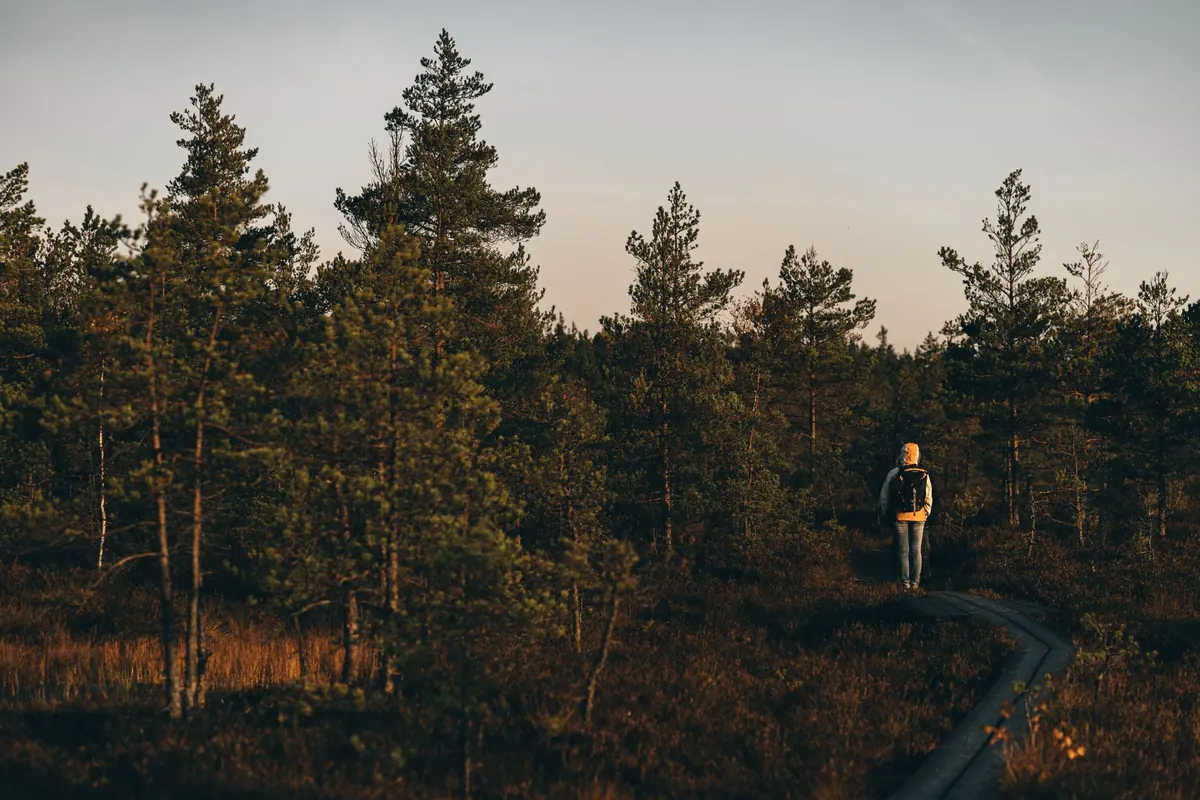
A walk can be a commute, a way to clear your head, or the dog's daily due. It can also be a practice. Mindful walking takes something most of us do on autopilot and gives it a shape: feet on the ground, senses open, attention gently returned whenever it wanders off. No cushion, no incense, no twenty minutes of sitting still required.
It suits the outdoors particularly well. Nature keeps supplying small, changing things to notice — the swing of a branch, gravel shifting underfoot, the smell of damp leaves after rain — and those details give a restless mind somewhere useful to land. What follows is a beginner's method you can use on a park path, a canal towpath, or the lane behind your house.
Mindful walking is not about emptying your mind, and it is not a slow-motion performance for the benefit of other pedestrians. It means walking with your attention in the present moment: aware of your body moving, aware of what is around you, and aware when your thoughts have drifted off without treating that drift as a failure.
There is no correct distance and no target pace. A ten-minute wander counts. So does stopping halfway to watch a heron for four minutes. The only thing that distinguishes a mindful walk from any other walk is where your attention is, and how kindly you bring it back when it slips.
Keep the setup light. Beginners who over-plan tend to do it once and never again.
Choose a safe route, and let someone know roughly where you are going if you are walking alone somewhere quiet or after dark. If you have a heart condition, a recent injury, balance problems, or you are pregnant, check with your GP before extending your walks or adding new terrain.
Use these in order. On a longer walk, you can cycle through them more than once.
It rarely does at first. Shorten the leash: instead of watching your thoughts, count ten steps and start again at one. Give the restless part of your mind a small job and it usually settles.
Walking at a normal pace makes you invisible. Nobody on a towpath is studying your technique. If it still bothers you, begin on quieter paths and keep your first few walks short.
Boredom often means attention has narrowed to a thin strip. Investigate something closely instead: the pattern of bark, the sound your shoes make on different surfaces, how many greens you can name. Boredom tends to dissolve when curiosity takes over.
Attach the walk to something you already do without thinking. After your morning coffee, before you open your laptop, when you post a letter. Same trigger, same route, same length — the routine does the remembering for you.
Rain is not a problem for the method; it is more sensory information. Water on your face, the smell of wet pavement, the sound of it in the trees. Dress for it and go anyway. If the weather is genuinely unsafe, a ten-minute walk indoors along a corridor works too.
Two or three short walks a week will teach you more than one heroic hour-long attempt. Aim for consistency over duration, and let the length grow by itself as the practice becomes easier to settle into.
If you are using walking to support your mental health, treat it as one helpful habit among several rather than a treatment. Persistent low mood, anxiety or sleep problems deserve a conversation with your GP or another qualified professional.
Pick a familiar loop today. Leave the headphones behind, put your phone away, and walk for one minute just feeling your feet. Spend the next three minutes on sounds. Match your breath to your steps for four minutes, naming thoughts as they come. Then stop, stand still, and take three slow breaths before you walk home.
That is the whole thing. Not a technique to master, but a way of walking you can return to on any ordinary afternoon — and, with a bit of repetition, on the difficult ones too.
Photo: Alari Tammsalu / Pexels
Previous Post
The British Summer Hay Fever Checklist: Natural Ways to Ease Symptoms
Next Post
Winter Vitamin D in the UK: How to Spot a Shortfall and What to Do